Soft Skills as the New Hard Skills: Why A-Players Need High EQ in an AI World


AI can draft a follow-up email. It can summarize meeting notes, organize project details, analyze information, automate repetitive tasks, and help teams move faster.
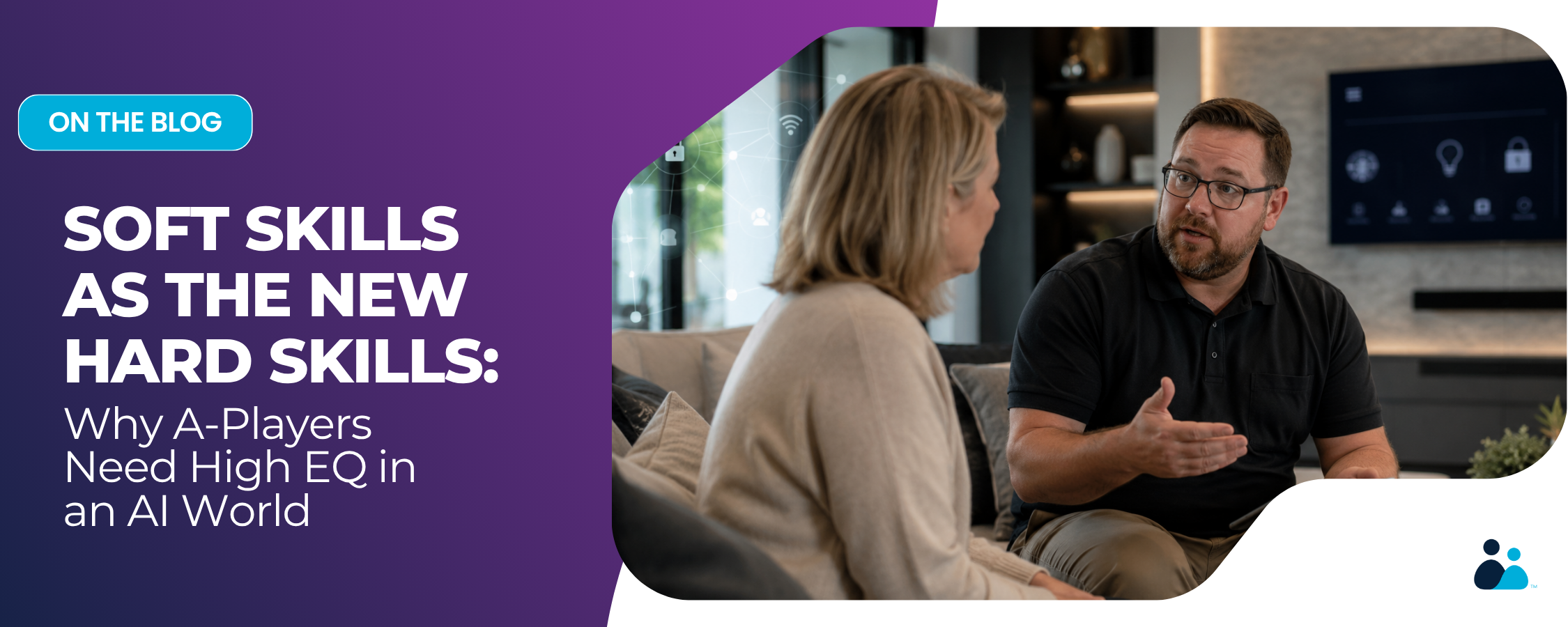
But AI cannot stand in a client’s living room during a tense site visit, recognize frustration on their face, choose the right words, and rebuild confidence in the company.
It cannot calm a high-net-worth homeowner when a project is delayed. It cannot sense when a client needs reassurance instead of more technical detail. It cannot take ownership in a way that feels human, sincere, and trustworthy.
That is why soft skills are becoming the new hard skills.
As AI continues to reshape the workplace, technical expertise will still matter. Businesses will always need skilled technicians, project managers, sales professionals, service coordinators, and leaders who understand the work. But the people who stand out — the true A-players — will be those who can combine technical ability with emotional intelligence, communication, adaptability, and sound judgment.
For businesses, this means hiring and developing people who can protect the client experience in the moments that matter most.
For candidates, it means recognizing that how you communicate, respond, listen, and lead may be just as important as what you know how to do.
In the custom integration, AV, security, and smart home industries, where teams often work inside clients’ homes and manage complex, high-touch projects, communication is not a secondary skill. It is part of the service experience.
AI Is Changing the Work, But People Still Shape the Experience
There is no question that AI is becoming a valuable tool in the workplace. It can support efficiency, improve documentation, help employees access information faster, and reduce time spent on repetitive tasks.
For growing businesses, that matters. Teams are busy. Client expectations are high. Projects are complex. Anything that helps employees stay organized, informed, and efficient can create real value.
According to the World Economic Forum’s Future of Jobs Report 2025, employers expect workers to balance technical proficiency with human skills such as empathy, active listening, curiosity, lifelong learning, service orientation, and customer service. In other words, the future of work is not only about learning how to use new technology. It is about becoming more capable in the areas where people still make the biggest difference.
Because the client experience is rarely built on efficiency alone.
A client may not remember every technical specification of their system, but they will remember how your team made them feel when something went wrong. They will remember whether the technician was respectful in their home. They will remember whether the project manager communicated clearly. They will remember whether their concern was acknowledged or dismissed.
In high-touch service industries, the human experience often determines how the technical work is perceived.
A beautiful installation can still leave a poor impression if the client feels confused, ignored, or frustrated. A project delay can be handled successfully if the team communicates early, clearly, and professionally. A service issue can become an opportunity to strengthen trust if the person handling it shows empathy, ownership, and confidence.
AI can help support the work behind the scenes. But people still shape the relationship.
What High EQ Looks Like on the Job
Emotional intelligence, often called EQ, is the ability to recognize, understand, and manage emotions in yourself and others. In the workplace, EQ is not abstract. It shows up in practical, observable ways.
It is the technician who notices a client is becoming anxious and slows down to explain what is happening.
It is the project manager who gives a realistic update rather than overpromising.
It is the salesperson who listens carefully before recommending a solution.
It is the service coordinator who responds with patience when a frustrated client calls about an urgent issue.
It is the team lead who can give feedback without discouraging the person receiving it.
High EQ does not mean avoiding difficult conversations. It means handling them well.
It means staying calm under pressure. It means listening before reacting. It means knowing how to explain a problem without creating panic. It means being honest without being careless. It means taking accountability without becoming defensive.
For businesses, these skills can directly influence client satisfaction, referrals, reviews, team morale, and long-term reputation.
For candidates, these skills can become a major career advantage. As AI tools become more common, employers will continue looking for people who can do what technology cannot: build relationships, navigate ambiguity, communicate with empathy, and make sound judgment calls in real time.
The Best A-Players Are Not Just Technically Strong
For many businesses, an “A-player” has traditionally been defined by technical performance. They know the products. They understand the systems. They can troubleshoot quickly. They can get the job done.
Those qualities are still important, but they are no longer enough on their own.
A technically skilled employee who communicates poorly can create confusion, frustration, or mistrust. A team member who avoids difficult conversations can leave clients feeling ignored. A candidate with the right certifications but low self-awareness may struggle to collaborate, receive feedback, or represent the company professionally in the field.
On the other hand, someone with strong emotional intelligence can elevate the entire client experience.
They know when to listen before explaining. They can stay calm when a situation becomes tense. They understand how to communicate delays without creating unnecessary concern. They translate technical information into a language a client understands. They take accountability in a way that builds trust instead of blame.
In an AI-supported workplace, this matters even more.
Research from Harvard Business School Working Knowledge highlights that soft skills such as communication and critical thinking may become even more important as AI reshapes the workforce. As tools become smarter, faster, and more accessible, the human difference becomes more visible and essential.
The most valuable employees will not simply be the ones who know how to use technology. They will be the ones who know how to use technology while still leading with empathy, professionalism, and judgment.
Why Communication Is a Business Advantage
Communication is often described as a soft skill, but its impact is anything but soft.
Clear communication can prevent problems before they escalate. It can reduce misunderstandings, improve collaboration, create smoother project handoffs, and help clients feel confident throughout the process.
Poor communication does the opposite.
A delayed update can make a client feel forgotten. A rushed explanation can create confusion. A defensive response can turn a small concern into a larger issue. A lack of internal communication can lead to rework, missed details, and inconsistent client experiences.
For businesses in the custom integration and AV space, communication is also closely tied to brand perception. Employees are not only completing tasks. They are representing the company in every email, phone call, walkthrough, installation, service visit, and follow-up conversation.
This is why excellence in Communication matters.
It is not only about being friendly. It is about creating clarity. It is about setting expectations. It is about helping clients feel informed and respected. It is about ensuring the team understands what needs to happen next. It is about making professionalism visible in every interaction.
When communication is strong, clients feel more confident. Teams operate with less friction. Leaders spend less time managing preventable issues. The business becomes more consistent, more trusted, and more resilient.
What Businesses Should Look for When Hiring
Hiring for technical skills is often easier than hiring for emotional intelligence. Certifications, experience, portfolios, and role-specific knowledge can be reviewed on a resume or assessed through technical questions.
Soft skills require a more intentional approach.
Businesses should pay attention not only to what a candidate has done, but also to how they communicate about it. The interview process reveals a lot about a person’s self-awareness, professionalism, and ability to build trust.
Look for candidates who can explain complex ideas clearly. Listen for signs of accountability. Notice whether they ask thoughtful questions. Pay attention to how they describe past challenges, difficult clients, or team conflicts.
Strong candidates do not need to have a perfect answer for every situation. But they should be able to show that they can reflect, learn, adapt, and communicate with maturity.
Behavioral interview questions can help reveal these qualities. For example:
“Tell me about a time you had to communicate bad news to a client or manager. How did you handle it?”
“Describe a situation where a client was frustrated. What did you do to resolve it?”
“Tell me about a time you misunderstood something at work. What did you learn?”
“How do you communicate technical information to someone who is not technical?”
“What does great communication look like during a project?”
These questions help employers move beyond surface-level answers. They reveal how a candidate thinks, responds under pressure, and approaches relationships.
Just as importantly, businesses should remember that communication skills can be developed. Excellence in Communication should be part of onboarding, coaching, performance conversations, leadership training, and team culture. If a company wants employees to communicate with clarity and care, it must define what that looks like and reinforce it consistently.
What Candidates Should Know About Standing Out
For candidates, the rise of AI should not only be viewed as a challenge. It should also be viewed as an opportunity.
As AI becomes more common in the workplace, professionals who can combine technical skills with strong human skills will become even more valuable.
That means your communication style matters. Your ability to stay calm matters. Your willingness to listen matters. Your professionalism in a client’s home matters. Your ability to explain, collaborate, adapt, and take ownership matters.
If you are looking for your next opportunity, do not only focus on listing your technical abilities. Be ready to show how you work with people.
Instead of saying, “I’m a good communicator,” share a specific example. Talk about a time you explained a technical issue to a non-technical client. Describe how you handled a stressful service call. Explain how you kept a project moving when expectations changed. Share how you helped a teammate, solved a misunderstanding, or earned a client’s trust.
These examples help employers see the full picture of what you bring to the table.
Candidates can also strengthen communication skills by asking for feedback, practicing active listening, writing clearer updates, preparing for difficult conversations, and paying attention to how others experience working with them.
These are not secondary skills. They are career-building skills.
Technical knowledge may help you get noticed, but emotional intelligence can help you grow, lead, and become the kind of professional companies want to keep.
If you are exploring your next move in the AV and custom integration industry, Amplify People’s career resources and open roles can help you find opportunities that align with your goals, strengths, and values.
The Future of Work Is Human-Led and AI-Supported
AI will continue to change how businesses operate. It will help teams become faster, more efficient, and more informed. It will likely become part of many roles, workflows, and hiring conversations.
But it will not replace the human moments that define trust.
Deloitte’s research on human skills and high-performing teams in the AI era reinforces this idea: the strongest teams are not simply AI-powered. They are human-led and AI-powered. Technology may support performance, but human capabilities still shape how teams collaborate, solve problems, and create meaningful experiences.
A client’s confidence is often shaped by the conversations that happen when something changes, breaks down, is delayed, or becomes unclear. A company’s reputation is often protected by employees who know how to communicate with care under pressure. A candidate’s long-term success is often determined not only by what they can do, but by how they make others feel while doing it.
That is why Excellence in Communication is not just a professional ideal. It is a business advantage.
For employers, the message is clear: hire for human skills with the same intention you bring to technical qualifications.
For candidates, the opportunity is just as clear: build the communication, emotional intelligence, and relationship skills that AI cannot replicate.
In an AI world, soft skills are no longer “soft.”
They are the skills that build trust, protect relationships, strengthen teams, and separate good talent from true A-players.